![]() |
||||||||||
|---|---|---|---|---|---|---|---|---|---|---|
Grays and Torreys PeaksSeptember 28, 1998 - from Stevens Gulch
On the second weekend since relocating to Wyoming from Maryland, I made another day climb, this time to Grays and Torreys Peaks. Dan (college and Md. Climbing buddy) and I had been to the trailhead a decade earlier but the weather did not cooperate on that trip. Now, I was back to take another shot at this pair connected by a saddle. The trail up the basin climbs steadily and I made good time for a person just ten days removed from the flatlander’s life. I passed the cut off for Kelso Ridge but did not give it a thought, as my climbing experience to date was limited to trail based walkups. The Gray’s trail is in fact an old carriage route and outside of some confused braiding on the flank of Grays, one is deposited on the summit with the only toll being a willingness to keep a steadily pace. A few hours after starting, I was on the top and looking down the connecting ridge to Torreys in the distance. I had come as far as Grays so now it was off to Torreys. I descended the flank and headed up the trail to the top of Torreys but the altitude factor had really kicked in by this point. The trail is not that steep but I found myself stopping often and the route ahead seemed to become increasingly vertical before my eyes. I knew it was the air, or lack of it, so kept trudging along, one step at a time. I write this narrative as a devotee of the rest step and a great deal more climbing experience, but at the time, I was hurting. Well, I made the top, vowed to get into better shape and was thankful that a climb like this was now in my driving distance backyard. Torreys PeakApril 14, 2002 - Kelso Ridge
Reflecting on a sad and pitiful failure on Bierstadt, a mere two weeks prior, I knew it was time to cast off the stigma of being a total wuss and get to the top of something. We had planned a group climb but due to a conflict, I became a solo act and planned an early departure from Cheyenne. The trip to the Bakerville exit on I-70 started all too early, 2:30 a.m. but I was rewarded by open road all the way to the Grays Peak trailhead. I had hoped this would be, as I really did not want to do a road march over some single snow hummock and then walk dirt in the dark to the trailhead. Fortunately, all the hummocks were well rutted and 4wd was not needed to make it to the end of the road.
I locked up the truck for the third time and set off for Kelso Ridge. I do not think I have ever gotten away from the truck on the first try, as I always forget something, twice. Usually glasses or hat, I never totally screw up and leave them behind, but 5:20 is too damn early to depart properly on the first attempt. Tradition upheld, I crossed the bridge and made my way under headlamp for the head of the valley. The trail was mostly snow covered though the flanking “Remarkables” were bare and much of the valley floor was melted out. My alpine start would clearly pay dividends as I stepped smartly over the two-foot deep postholes, giving thanks to my early out, early back plan, in lieu of the late start, posthole hell alternative.
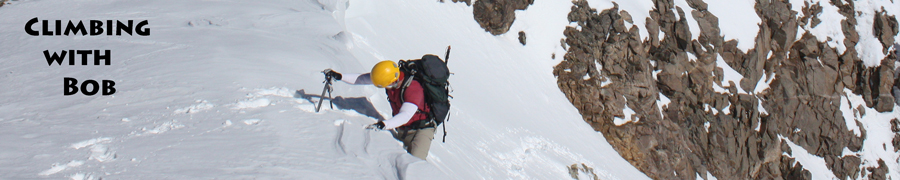
The sun hit Torreys just a few minutes before I reached the cutoff point to the Kelso/Torreys saddle and illuminated the ridge proper. My earlier climb to bag Grays and Torreys was back in my single digit days and I paid little attention to this more challenging route. Of course, that did not really matter, my gut says very few single digit peak baggers have any business on the tougher route anyway and I was certainly no exception to that theory. I made the saddle and looked up at the mixed rock and snow on the ridge. From afar, it does not look too bad but once you get a bit closer you realize it is a craggy scramble to the top, past various gendarmes, class 3 pitches and the later class 4 crux move. I found the Roach description to be dead on accurate as I made my way up the ridge. The “slot” move to the left of the lower gendarme was filled with snow and I kicked a set of steps on up to the half way point wherein rock holds replaced the ice axe placements. As the descriptions say, the rock pitches alternate with walking and scrambling sections, some with obvious trail segments. The next class 3 pitch had a bit more snow but who can complain when the handholds are as solid as those I found are. The snow however was definitely more winter than spring with a buried slab layer, facets underneath, and powder on top. I would have been happier with good cramponing up the ridge but the skiers I passed later on the trip down were no doubt quite content with the conditions I found disappointing.
The crux of the climb is just 200 yards shy of the summit and provides a choice of routes by which the summit may be gained. Given the condition of the snow in Dead Dog Couloir, it’s terminus was no place to be traversing when another route was available. The class 3 gully climb to the north was obvious but the scramble across the combination of winter snow and rock to get there was more class 4 than the direct pitch up the middle. Looked to me that the direct route was the best option and within a minute or two, the solid handholds yielded a route to the gentler sloped terrain above the crux pitch. I do not mean to underplay this section of the climb at all. It was one of those “stop and look this over” pitches where as much time is spent looking at each route as I spent climbing pitch.
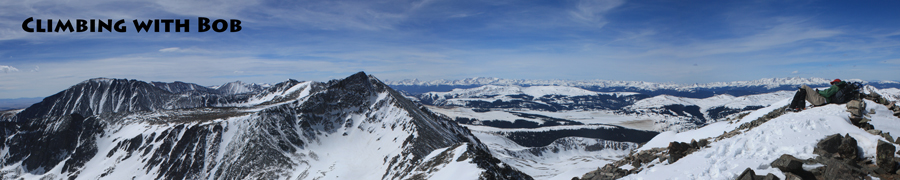
From the top of the crux, it was a snow hike to the summit and a grand view of the surrounding ranges. Sometimes you score a day where the air is clear and you see Longs to the north, the Sierra Blanca to the south, and yes, even the closer San Juans in the far distance. I headed down the Torreys tourist route, which was mostly blown clear to the Grays/Torreys saddle. The saddle had a large cornice and I had to go about 150 vertical feet up the flank of Grays to hit a crossing point from which an easy downclimb could be made to the dry season trail below. It was a beautiful day and Grays had at least a dozen climbers in various parties either on the summit, on the switchbacks or just coming to the head of the valley. By this point, it was 9:30 and I was intent on making time down the valley before some of those lower trail postholes began reproducing in the warmth of the spring sun. Torreys via the Kelso Ridge ended up taking 6 ½ hours and did prove to be a challenge. There are airy sections and steep couloirs that top out right along the ridge traverse, so care in movement is a requirement. However, I found the terrain manageable and though the snow was definitely on the powdery side, the hand holds more than made up for the lack of cramponing opportunities.
|